

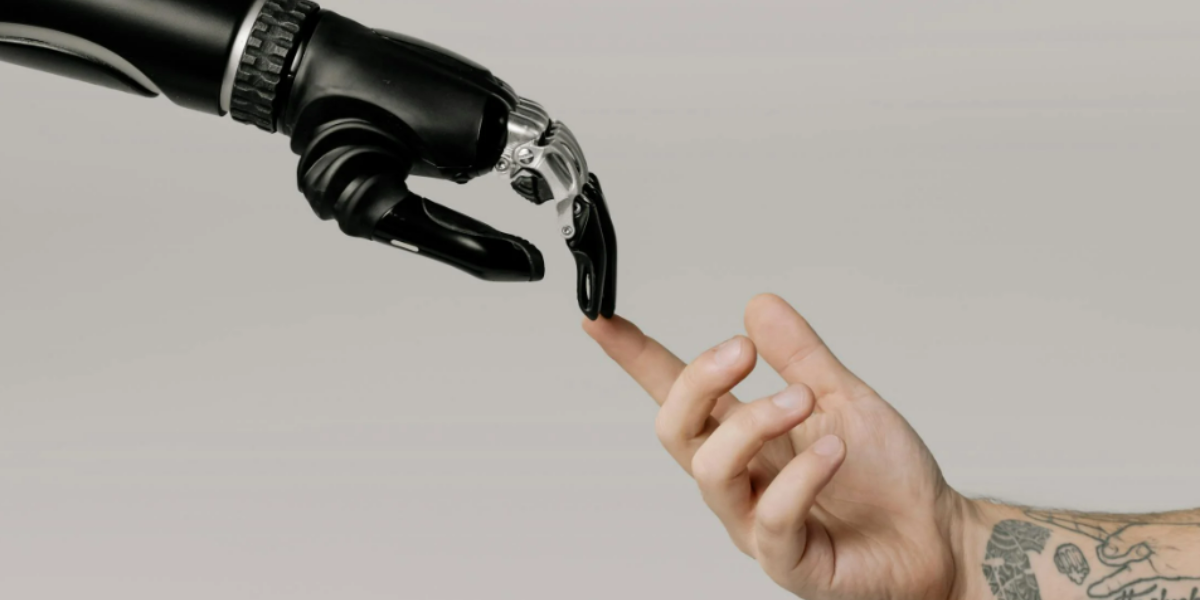
Automation and artificial intelligence are changing workplaces everywhere. While predictions of mass unemployment have been circulating for decades, research suggests a far more nuanced future, one marked by disruption, transition and new opportunities. Studies from Goldman Sachs Research, McKinsey, PwC, the World Economic Forum and leading economists paint a picture of significant change, but not inevitable catastrophe.
A Temporary Shock, Not Permanent Job Collapse
Goldman Sachs Research estimates that AI adoption will cause only a modest and temporary rise in unemployment. Their analysis suggests joblessness may increase by around 0.5 percentage points during the transition, as workers shift to new roles.
Each 1% boost in technology-driven productivity has raised unemployment by only 0.3 percentage points, an effect that typically disappears within two years. According to Goldman Sachs researchers Joseph Briggs and Devesh Dong, this frictional unemployment is common during periods of rapid technological change.
If current AI tools were universally deployed across the economy, Goldman Sachs estimates that about 2.5% of US jobs would be at risk from efficiency-related displacement.
How Many Jobs Could Be Displaced?
Analyses differ, but most agree that AI will significantly reshape occupations:
- Goldman Sachs estimates 6-7% of the workforce could be displaced in a broad AI-adoption scenario, although outcomes range from 3% to 14% under varied assumptions.
- McKinsey projects that up to 15% of the global workforce (400 million people) may need to transition to new roles by 2030 in a midpoint scenario.
Displacement is only half the story. McKinsey’s modelling suggests that AI and economic growth could create 21-33% more jobs by 2030.
Productivity Gains And Economic Promise
Generative AI could raise labour productivity in advanced economies by around 15%, according to Goldman Sachs. These gains are echoed by McKinsey, whose research suggests that AI and automation could reverse the long-term decline in productivity growth seen since the 2008 financial crisis.
Jobs Most At Risk
Roles facing high exposure to automation often share repetitive, rules-based or data-heavy characteristics. Occupations repeatedly flagged as vulnerable include:
- Computer programmers
- Accountants and auditors
- Legal and administrative assistants
- Customer service agents
- Telemarketers and credit analysts
- Proofreaders and copy editors
Industries already showing early signs of disruption include marketing services, graphic design, office administration and call-centre operations.
AI is also affecting the technology sector itself: employment in computer systems design and software publishing has slowed since late 2022, with younger tech workers (aged 20-30) experiencing a rise in unemployment.
Jobs Least Likely To Be Automated
Roles requiring interpersonal judgement, creativity or physical presence remain comparatively safe. Occupations with low automation risk include:
- Air-traffic controllers
- Chief executives
- Radiologists and pharmacists
- Teachers and residential advisors
- Skilled trades such as electricians and plumbers
- Clergy and pastoral workers
- Healthcare and social-care roles
These jobs rely on empathy, complex decision-making, and situational awareness, areas where AI still struggles.
A Timeline For Transformation
Experts broadly converge on a 10 to 30-year transformation window:
- McKinsey: 30% of jobs automated by 2030; 60% significantly altered
- Goldman Sachs: Up to 50% automation by 2045
- World Economic Forum (2025): Rapid acceleration in white-collar automation
- PwC: Major workforce reinvention by 2050
Economists such as founder of the Bridgewater hedge fund Ray Dalio warn that AI may trigger a “great deleveraging,” accelerating productivity faster than job creation in the short term, as per Forbes. Others, including US Treasury Secretary Scott Bessent, argue that retraining and education could extend adjustment timelines and soften the impact.
AI As A Job Creator
Technology has historically been a net creator of work. Over 60% of Americans today work in occupations that did not exist in 1940. The rise of personal computing, mobile apps and e-commerce all created millions of jobs in fields unimaginable a generation earlier.
AI is likely to follow a similar trajectory. New roles emerging include:
- AI safety and auditing specialists
- Prompt engineers
- Data-ethics officers
- Robotics maintenance technicians
- Cybersecurity analysts
Many of these fields are growing faster than traditional education systems can supply talent.
How Work Itself Will Change
Even when jobs remain, their task mix will shift. Research from McKinsey shows that roughly half of today’s work activities could be automated using currently demonstrated technologies.
Examples include:
- Doctors using AI for diagnostic screening
- Retail workers becoming machine-assistance operators for self-checkout systems
- Factory workers supervising robotic workflows
- Journalists using AI for research and draft generation
Rather than replacing workers wholesale, AI will increasingly act as a “co-pilot.”
Skills For The Future
Demand for certain skills will surge while others decline:
Rising Skills
- Advanced digital fluency
- Data analytics and AI literacy
- Social and emotional skills
- Creativity and complex problem-solving
- Critical thinking and adaptability
Declining Skills
- Routine manual labour
- Repetitive administrative tasks
- Basic data processing
Skill demand is already evolving faster than traditional education systems can adapt, requiring governments and employers to rethink lifelong learning and credentialing.
Risks: Inequality, Wage Pressure And Social Strain
Automation is likely to intensify existing labour-market divides. Middle-income jobs, often the most automatable, may shrink, while high-skill and low-skill roles grow. This could widen inequality unless supported by policy interventions.
McKinsey warns of echoes of “Engels’ Pause”, the 19th-century period during the Industrial Revolution when wages stagnated despite rising productivity.
Policy And Business Priorities
Leading research bodies highlight several actions needed to manage the transition smoothly:
- Boost productivity and economic growth to generate new jobs.
- Encourage business dynamism by supporting start-ups and innovation.
- Rebuild education systems to emphasise STEM, creativity and lifelong learning.
- Invest in human capital, reversing decades of decline in worker-training budgets.
- Improve labour-market mobility with better job-matching and portable benefits.
- Redesign workplaces for safe human–machine collaboration.
- Rethink income supports, from wage subsidies to conditional transfers or UBI pilots.
- Strengthen transition assistance for displaced workers.
- Invest in job-creating sectors such as infrastructure, climate adaptation and healthcare.
- Adopt AI responsibly, prioritising privacy, safety and fairness.
Preparing For The AI-Driven Future
AI’s impact will not be uniform, and the pace of change will vary across countries and sectors. Nevertheless, the direction is clear: automation will reshape how we work, what we do and the skills we need.
Workers who invest early in digital literacy, critical thinking and adaptive learning will be best positioned to thrive. As Ray Dalio argues, “those who prepare now will shape the world of tomorrow,” as per Forbes.
The future of work is not pre-written. With thoughtful policy, strategic investment and human-centred innovation, societies can harness AI’s productivity benefits while ensuring that people, not machines, remain at the heart of economic progress.