

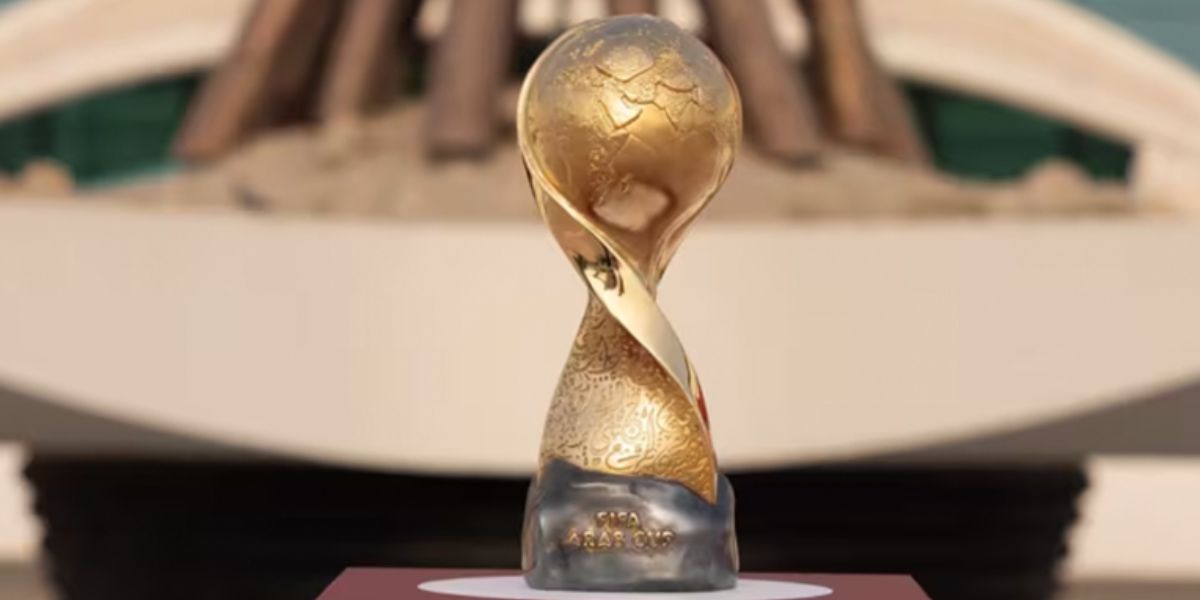
Football reaches its pinnacle every four years with the FIFA World Cup. For sheer scale, interest and global attention, it is a tournament that’s unmatched in the world of sports. The 2022 World Cup was the 22nd version of this competition. In 2030, the tournament will mark its 100th anniversary.
So, how did the World Cup begin and go on to become one of the most-watched sporting events on the planet?
The Federation Internationale de Football Association, or FIFA, was formed in 1904 to oversee and govern international football. It organised the first men’s World Cup in Uruguay in 1930. Barring a hiatus due to World War II, the competition has been organised every four years since then.
Uruguay 1930 To Brazil 1950: Birth Of The Tournament
The first tournament featured 13 teams. Uruguay lifted the trophy after beating Argentina 4-2 in the final. The 1934 and 1938 editions were the next two tournaments, which used a knockout-only format. In the 1950 tournament held in Brazil, the group stage returned once again.
Switzerland 1954 To Argentina 1978: 16 Nations In Search Of Glory
From 1954 until 1978, the participation was open to 16 teams. These tournaments were contested in every edition with 26 to 38 games. The 1954 edition began a format with 16 participating teams formed into four groups of four, with two top teams in each group going through to the quarterfinals. The 1958 format included all teams playing each other in their group to determine who would go forward, establishing the precedent for future competitions.
During this period, some legendary players emerged. Brazil’s Pele won his first World Cup in 1958 and went on to win two more in 1962 and 1970. England won the trophy at home in 1966. In 1974, it was Germany under Franz Beckenbauer.
Spain 1982 To USA 1994: The Era Of 24 Teams
Each tournament in this period featured 52 matches. FIFA expanded the tournament to 24 teams in 1982. The top two teams from six groups of four moved onto a second round that was divided into four groups of three. From there, the winners moved onto the semifinals. By 1986, Mexico had dropped the second group stage and switched back to a round-of-16 knockout stage. This format was used in 1990 and 1994.
France 1998 To Qatar 2022: The 32-Team Era
From 1998, the World Cup was expanded to 32 teams and 64 games per edition. The top two from each of the eight groups of four advanced to the round of 16. During this period, Argentina won the Qatar World Cup in 2022 and Lionel Messi cemented his status as one of football’s all-time greats. This era also saw France winning in 1998, and regular appearances by Brazil in finals.
Iconic Moments
1958: Emergence Of Brazil And Pele
The then-17-year-old Pele guided Brazil to its first World Cup win. He played a big role in Brazil’s knockout stages, scoring a hat-trick in the 5-2 semi-final victory against France. Pele once again showed his class in the final, finding the back of the net twice to seal a first World Cup for Brazil.
1966: England’s Lone Triumph
In an electrifying final at Wembley, England defeated West Germany 4-2 to win their first World Cup. Till date, this is England’s only win in the World Cup.
1970: Brazil’s Third Title And The Birth Of A New Trophy
The Jules Rimet Trophy served as the World Cup trophy from 1930 to 1970. After Brazil won their third championship in 1970, they were allowed to keep the trophy permanently. A new FIFA World Cup trophy was created for later tournaments.
1986: Diego Maradona’s ‘Hand Of God’ And Goal Of The Century
A controversial hand goal was scored by Diego Maradona in the 1986 quarterfinal between Argentina and England. The goal stood, as the referee failed to notice it. After the match, Maradona said famously that it was “a little with the head of Maradona and a little with the hand of God.” In the same game, he scored what is known as the goal of the century. It included a breathtaking solo run past many English defenders before netting the ball.
2006: Zinedine Zidane’s Headbutt
The final between France and Italy featured one of the most shocking moments in the history of the tournament. After a verbal argument, France’s Zinedine Zidane head-butted Italian defender Marco Materazzi. Zidane’s career came to an infamous end when he was sent off in what turned out to be his last game as a professional football player.
2022: Messi And Mbappe Face Off In An Epic Final
Lionel Messi opened the score with a penalty. Then he provided Angel Di Maria with an assist for Argentina’s second goal a few minutes before halftime. Ten minutes from the end, Kylian Mbappe answered with a penalty, and promptly followed it with a volley to equalise the score and force extra time. Mbappe converted another penalty to keep France in the running after Messi appeared to have won the game with a goal in the 108th minute. The match went into a shootout. In one of the most thrilling finals in history, Argentina won their first World Cup since 1986.
FIFA World Cup 2026: What To Expect
The 2026 tournament will mark a historic expansion to 48 teams, jointly hosted by Canada, Mexico and the United States. There will be a total of 104 matches. This new format will reintroduce the best third-placed teams and debut a round of 32, reflecting football’s growth and the increasing number of competitive nations worldwide.
With this expansion, the FIFA World Cup enters a bold new chapter, which is more inclusive, more competitive and more global than ever before.