

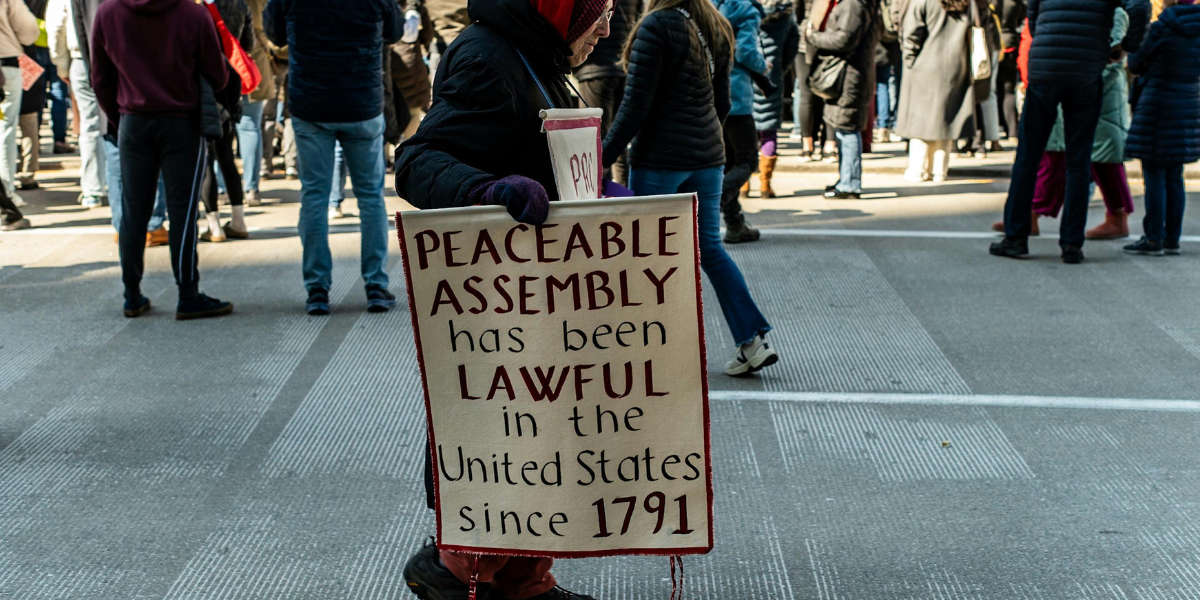
The First Amendment to the United States Constitution is one of the most powerful and widely cited parts of American law. It exists to ensure that the government does not control ideas, beliefs, or public debate. It applies primarily to actions by the state, meaning the government cannot unfairly restrict these rights even when speech or views are controversial or unpopular.
What Is The First Amendment?
The First Amendment stops the government from limiting five key freedoms to protect people’s ability to express ideas and opinions freely. These protections apply to actions taken by the government, not to rules made by private companies or individuals. It was adopted in 1791 as part of the Bill of Rights.
What Does The First Amendment Protect?
Freedom of Religion
This includes two important principles. The government cannot establish an official religion and individuals are free to practice their religion (or choose not to) without government interference.
Freedom of Speech
Citizens have the right to express opinions, ideas, criticism, and dissent without fear of government punishment. This protection extends to spoken words, written content, symbolic expression, and even art. While not absolute, speech that incites violence or poses a direct threat can be restricted.
Freedom of the Press
The press has the right to publish news, opinions, and investigations without censorship by the government. This freedom allows journalists to report on those in power, expose wrongdoing, and inform the public.
Freedom of Assembly
People are allowed to gather peacefully for protests, demonstrations, or meetings. This right enables collective expression, whether in support of a cause or in opposition to government policies.
Right to Petition the Government
Citizens can complain to, lobby, or seek changes from the government without fear of punishment. This includes signing petitions, filing lawsuits, or contacting elected representatives.
How The First Amendment Works
The text of the First Amendment begins with a clear restriction on government power – “Congress shall make no law respecting an establishment of religion, or prohibiting the free exercise thereof; or abridging the freedom of speech, or of the press; or the right of the people peaceably to assemble, and to petition the government for a redress of grievances.”
This language limits the power of the government. It means the state cannot force a religion on people, stop them from criticising leaders, control the media, or block peaceful protests.
That said, these freedoms are not unlimited. Courts allow restrictions in certain cases, such as speech that encourages violence, threatens public safety, or harms someone’s reputation. Any such limits are carefully examined under the law.
Landmark Examples And Legal Limits
Over time, courts, especially the US Supreme Court, have clarified the scope of First Amendment protections. One of the earliest examples is Schenck v. United States (1919). Charles Schenck, an anti-war activist, was arrested for asking men to resist the draft during World War I. The Supreme Court ruled that speech that poses a “clear and present danger” to national security is not protected. This case helped define limits on free speech.
Modern disputes such as workplace speech controversies showed that the First Amendment restricts government action, not private employers. A private company may discipline or dismiss employees for speech that violates company policies, without violating the Constitution.
Limits Of The First Amendment
Although the First Amendment protects many freedoms, it does not protect all forms of expression. Some examples of limits include:
- Incitement to violence: Speech that encourages immediate harm is not protected.
- Defamation: False statements that damage someone’s reputation can be punished.
- Obscenity: Certain sexually explicit materials are restricted.
- Public safety threats: Actions that put people at risk, like false alarms or dangerous protests, may be limited.
Everyday Examples
- Protests and marches: Citizens gather to support climate action or civil rights.
- Social media posts: People share opinions online, even criticising government policies.
- Newspapers and blogs: Investigative journalists report on political and corporate issues.
- Religious practices: Individuals attend services, celebrate festivals, or pray freely.
- Petitions and campaigns: Citizens lobby for changes in law or policy through letters, petitions, or lawsuits.