

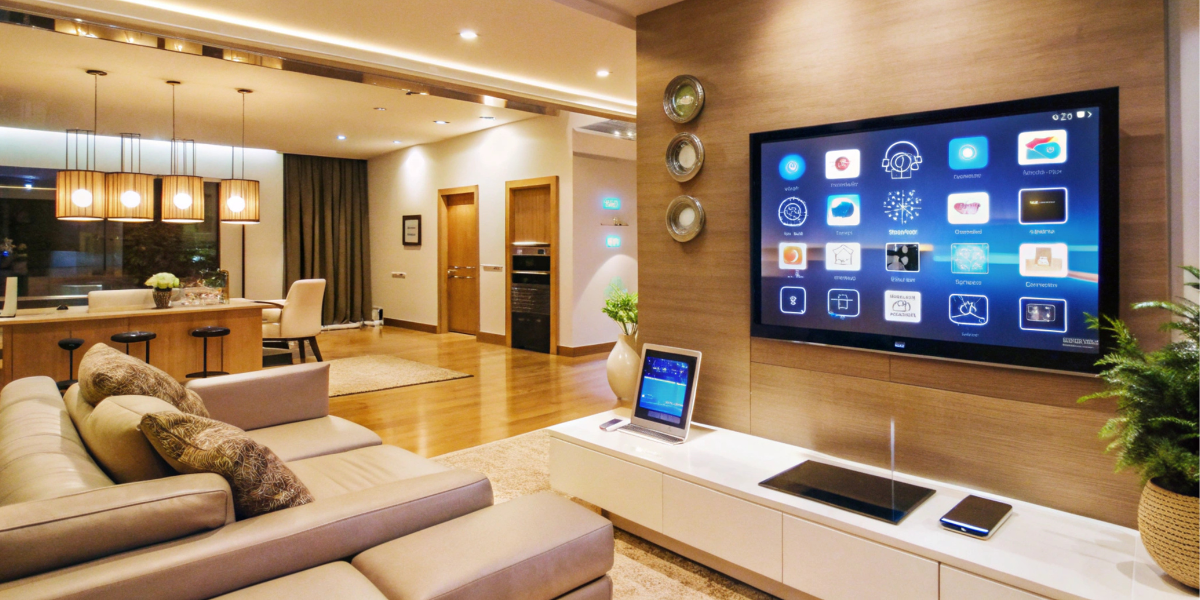
Home automation, also commonly referred to as smart home technology, uses internet-connected devices to monitor and control household functions such as lighting, heating, security and appliances. Once seen as a futuristic idea, it has now become accessible for anyone looking to simplify daily routines, increase safety and save energy.
By connecting devices through a central system, users can easily manage their home, whether it’s turning off lights with a voice command or warming the house through a smartphone app. Automating tasks or controlling them remotely makes daily life easier and more efficient
How Smart Homes Work
A smart home works by connecting devices to a central control point, which can be a smartphone, tablet, laptop or even a game console. This allows the user to control a wide range of devices inside a household, including door locks, televisions, thermostats, cameras, lights and appliances like refrigerators, all from one platform.
Users can schedule tasks, control devices remotely or monitor them from anywhere, making life easier. Many smart devices also learn people’s routines and adjust settings automatically to save energy.
Users can schedule tasks and remotely control devices from anywhere. Many smart devices even learn people’s routines and automatically adjust settings to save energy. Another benefit is security. More advanced home automation systems can notify a user if there is any movement when they aren’t at the house. Advanced settings can even notify the police or fire department in case of danger.
Smart Home Systems
Generally, there are two types of smart home systems: wireless and hardwired. Some houses may use a combination of both.
- Wireless Systems: Wireless systems are relatively quick and easy to install. They usually include features like smart lighting, climate control and security. But they depend heavily on strong Wi-Fi and reliable internet throughout the house. This could mean adding more range extenders or extra access points in larger homes. So, wireless smart home systems are best suited for small homes or for rentals where it is not practical to install cables.
- Hardwired Systems: This system is generally more reliable and secure, with a lower risk of hacking. It can also add value to a property and is easier to expand, which makes it a popular choice for major renovations. The main drawback is cost. Also, installation requires space for network hardware and cabling, which could be difficult to add in existing homes.
Components Of A Smart Home
- Heating: Smart home technology offers more control over heating and cooling systems. Heaters, radiators and air conditioners can be turned on or off remotely, adjusted manually, or automated using temperature or humidity sensors.
- Lighting: Smart lighting systems can turn lights on and off, be timed for a specific schedule and automatically dim or brighten according to the time of sunset or sunrise. Most smart lighting systems feature built-in motion sensors, which switch on when someone is in the room and switch off when the room is empty.
- Audio-Visual: Smart homes simplify entertainment because televisions and speakers can be connected through a single app or even a remote. These devices can work on schedules or voice commands.
- Security: Smart cameras detect motion, record footage, or live stream video to a mobile device. Video doorbells allow for two-way talk with visitors, remotely. Advanced systems can send suspicious activity alerts and lock doors or windows from anywhere.
- Other Devices: Smart homes also feature digital assistants or home hubs that respond to voice commands. These devices can manage calendars, set reminders, answer queries and control other smart devices. Smart smoke detectors not only trigger alarms but can also send alerts to mobile devices and, in some cases, even notify emergency services.
Benefits Of Smart Home Automation
Smart home automation offers practical advantages that make daily life easier, safer, and more efficient.
- Convenience: Control your lights, thermostat, locks, and appliances from anywhere using your smartphone or voice commands. This makes daily routines quicker and more streamlined.
- Energy Efficiency: Automated systems help save energy by turning off lights in empty rooms, adjusting heating or cooling based on occupancy, and managing high-energy appliances. Real-time monitoring also lets you make smarter energy choices.
- Security And Safety: Smart cameras, locks, sensors, and alarms allow you to monitor your home remotely. Receive instant alerts for unusual activity, and even simulate occupancy by scheduling lights to turn on and off when you’re away.
- Comfort and Ambience: Personalise your living space by adjusting lighting, temperature, and music to suit your mood. Create the perfect setting for movie nights, relaxing evenings, or entertaining guests—all with a tap or voice command.
- Integration And Connectivity: Smart devices work together seamlessly. Connect your system to assistants like Alexa or Google Assistant for voice control, or link entertainment devices for a fully connected home experience.
- Support for Seniors: Smart technology can support seniors or people with disabilities, offering motion-activated lights, medical alerts, reminders, and voice assistance to help maintain independence at home.
Disadvantages Of Smart Home Automation
- Security Risks: Smart home devices can be vulnerable to hackers if passwords are weak, software is outdated, or devices are connected to public networks.
- Extra Security Measures: To reduce risks, you need to regularly update software, use strong passwords, enable encryption, and only connect trusted devices.
- High Costs: Installing smart technology can be expensive, ranging from a few thousand pounds for a basic wireless setup to tens of thousands for a full hardwired system.
Overall, smart home technology has transformed the way people live by offering greater convenience, security, energy savings and comfort. As the technology evolves, smart homes are becoming more affordable and easier for people to adopt.