

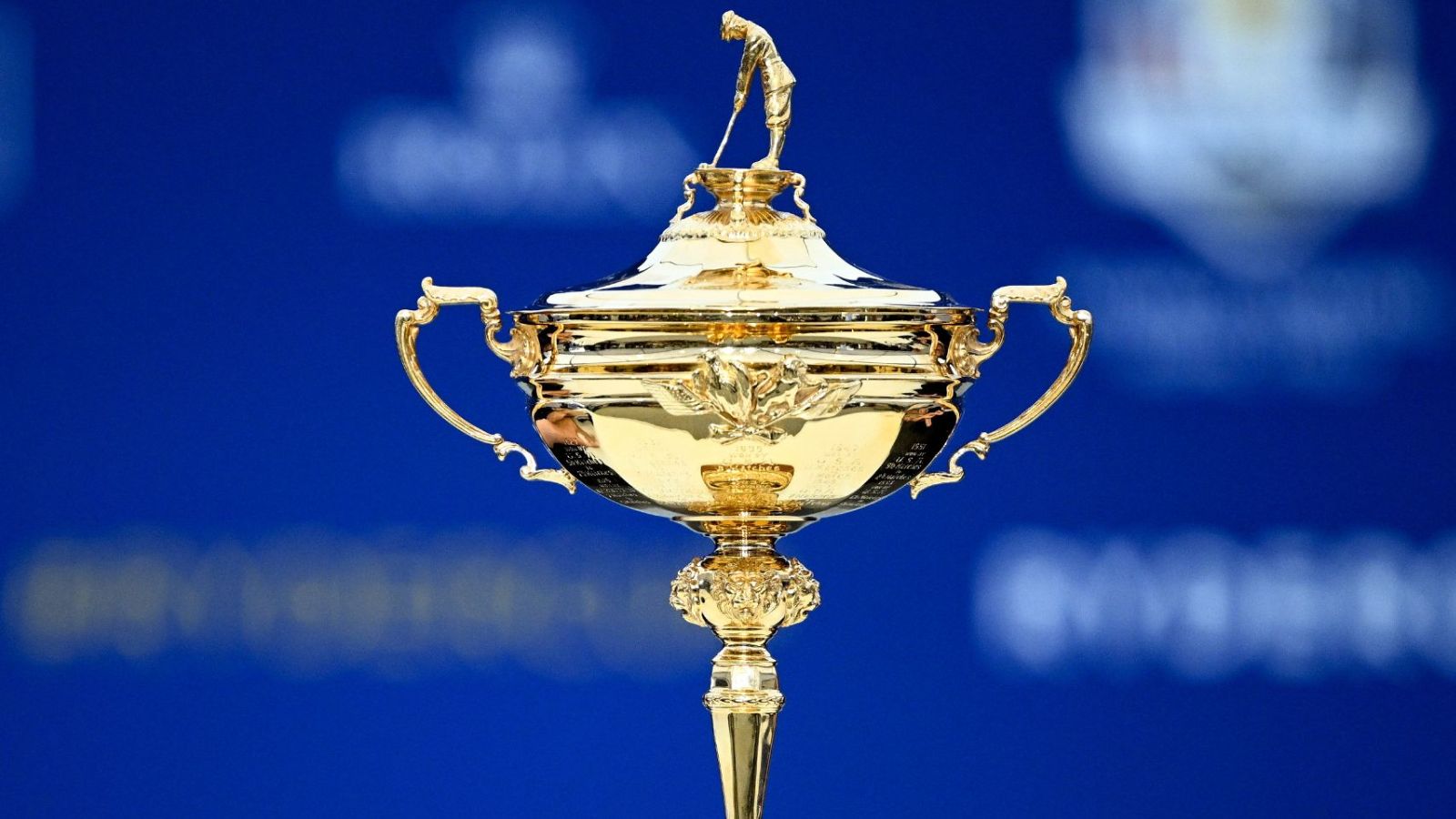
Ryder Cup
Golf is one of the most elite sports in the world and the Ryder Cup is its premier team competition. The Ryder Cup brings together leading golfers from the United States against their European counterparts in an exciting biannual competition, which sporting enthusiasts worldwide look forward to. Going beyond the regular golf events where players compete individually for the prize and a trophy, the Ryder Cup gives them a chance to play for national pride and honour.
The Ryder Cup is therefore considered one of the most prestigious golf tournaments, where players compete to bring laurels to the USA and Europe. It also has a fair venue allocation system, alternating between grounds in the USA and Europe every edition. The tournament follows a match play format, wherein 12 golfers per team compete across three days of high-intense action. Each match is worth one point and the team which reaches 14.5 points first is awarded the winner of the Ryder Cup. In case of a 14-point tie, the defending champions get to regain the title.
History
English businessman Samuel Ryder became the founder of the Ryder Cup after he donated the trophy upon watching an informal game between American and British professionals at the Wentworth Club in 1926. The following year, the first-ever edition of the Ryder Cup was held at Worcester Country Club in Massachusetts. The inaugural Ryder Cup was won by the team United States with a margin of 9.5-2.5 against Great Britain in 1927.
The first five decades of the Ryder Cup saw American dominance on display as golfers from the United States won 18 of the first 22 editions. The unmatched talent depth and resources aided the American supremacy, while the British team watched with envy. The United States team was so good that by the 1970s the Ryder Cup faced question marks for its one-sided nature and relevance as a sporting event.
The competition found its wind of much-needed transformation in 1979, when Jack Nicklaus suggested expanding the British team to include the best golfers from all of Europe. That historic move changed the competitive balance of the Ryder Cup. Spanish legend Seve Ballesteros then helped Team Europe win the title in 1985 and ushered in a new era, where the Europeans have won 11 of the last 18 matches.
How 12-Player Teams Are Formed
Both the USA and Europe teams have their respective qualification criteria for players to become eligible to join their forces for the Ryder Cup competition. The USA’s selection process follows a longstanding qualification metric. Top 6 players in the Ryder Cup points standings based on PGA Tour performance earn the six automatic qualification spots. The other six golfers are tagged as captain’s picks based on current form, course fit and team chemistry. The qualifying period spans the preceding Ryder Cup through to the playoffs before the tournament.
For Team Europe, the selection of the six automatic qualifiers is decided on the basis of the European Points List combining DP World Tour and designated PGA Tour events. Like Team USA, the six remaining players are identified as captain’s picks. The qualification is a recognition of global performance and European Tour commitment.
Format and Scoring System
The match play format is integral to the Ryder Cup, which is played across three days. Each contested match is worth one point and as mentioned above, the team which reaches 14.5 points first is awarded the trophy. The ties weigh half a point.
Day 1 & 2 (Team Matches)
Foursomes (4 Matches)
In this, two golfers of a team share one ball and take alternate turns to hit it. This can be demanding and requires a good strategy as players must adjust to their partner’s positioning and strengths.
Four-Balls (4 Matches)
Each player plays their own ball. The better score on each hole counts. It allows for greater risk-taking and aggression since players know their partners act as backups.
Foursomes (4 Matches)
It is the second session of the alternate play, where often a different set of pairings is made based on the earlier performance and future considerations.
Four-Balls (4 Matches)
It is the second and final set of four-ball play where captains finalise their line-ups for the ‘Sunday Singles’ after the gruelling Friday and Saturday.
Day 3 – Sunday Singles (12 Individual Matches)
All 12 players from each team compete in individual match play, a high-pressure stage of the competition where players individually carry their team’s hopes. It is also the stage where one of the players gets to score the winning point, i.e. the 14.5th point. Over the years, the singles stage has witnessed many dramatic comebacks and heroic championship winning hits.