

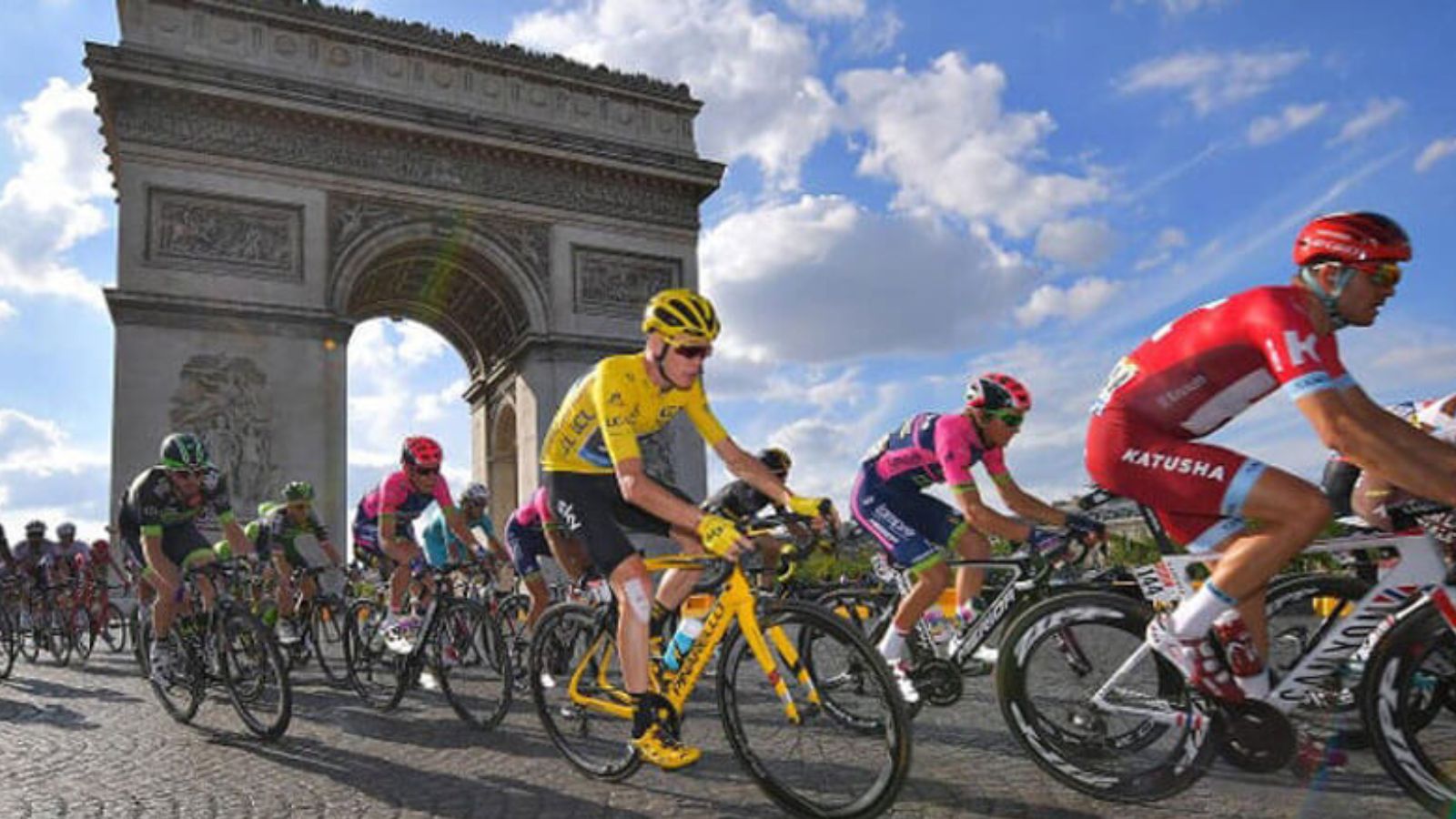
Originating in 1903, the Tour de France is one of the globe’s most renowned cycling races. Over the last 123 years, this event has captivated sports enthusiasts by bringing the world’s premier cyclists for a memorable showdown. Tour de France is hailed as the best of cycling as a sport, highlighting its ethos of endurance, strategy, and athletic prowess. Tour de France also has a rich history and has evolved quite dramatically as a competition.
Tour de France’s original roots lie with a French newspaper called L’Auto, which began the event as a means to boost its newspaper circulation. The first-ever Tour de France race caught the attention after it covered a massive 2,428 kilometres, taking place over six different stages. The competition’s first-ever winner was Maurice Garin, whose excellence in the race acted as a foundational stone for the Tour de France to grow into an iconic sporting event. Garin and the future Tour de France winners had to show remarkable physical and mental endurance during the race and overcome gruelling stages for the title.
Jerseys
The evolution of the Tour de France as a racing competition is most visible in the different jerseys that have emerged over the years. Back in 1919, the yellow jersey was introduced by the organisers. The yellow jersey was given to the race leader and is today a coveted prize in itself. The inception of the yellow jersey happened in the middle of the 1919 edition of the race.
As the Tour de France returned after a four-year hiatus, race director Henri Desgrange felt the man who ended first should be more clearly distinguished from his competitors on the podium. The transformative thought saw Eugène Christophe pull on the yellow jersey as that summer’s Tour de France champion.
The introduction of national cycling teams in 1930 ultimately led to the birth of the green jersey 23 years later. Once the format changed to allow cyclists to compete on a national line instead of sponsored teams, the influence of commercial interests reduced and the Tour de France started upholding national pride as a source of motivation for the competitors. One could also witness a sense of unity among riders. The advent of the green jersey in 1953 further motivated the riders, as it honoured the best sprinter of the race. Tour de France now also features the polka dot jersey and white jersey given to the race’s best climber and best young rider, respectively.
Rules and Strategies
The technological upgrades witnessed over the years have majorly transformed cycling as a sport and therefore, the Tour de France as an event. In the initial years, cyclists used lightweight carbon fibre bikes. They now operate on the top-notch cycles and equipment, including aerodynamic helmets, electronic shifting systems and super precise power meters. These technological advancements have not only shaped the modern racing scene but also led to major tweaks in rules and strategies.
In the early years, the Tour de France was considered a survival race and riders weren’t allowed to get any help from outside. In the modern era, however, the organisers allow for support teams and mechanical allies. It shifted the burden of repairing and rejuvenating the bike from the athlete to a professional crew. Other regulations that we take for granted today, such as the gear shifting for mountain terrains, weight limits and the helmet being mandatory, weren’t always in place and had to be introduced after different instances.
The Tour de France historically fluctuated between basing the championship standings on scoring points and time. The system currently prioritises the time and awards the racer who finishes all stages in the least time.
Doping
Despite the regulations, the Tour de France hasn’t been short of its controversies. Doping has tended to plague the event’s integrity, with several high-profile riders being forced to let go of their titles after being penalised for drug abuse.
The organisers have enforced stricter regulations and testing protocols to try and eradicate the malaise. Using an illegal substance to improve human endurance and performance during the race is highly unfair on cyclists who take part in the competition without adopting such terrible means and stick to fair practices. By doubling down efforts against doping, the Tour de France ensures it not only remains clean but also safeguards athletes from potential harm during the race.
It’s an important aspect of the overall organisation of the competition, especially as the Tour de France has witnessed plenty of accidents. Over the years, the Tour de France has been held amid progressive road conditions, enhanced medical support and more stringent rules regarding the mid-race conduct.