

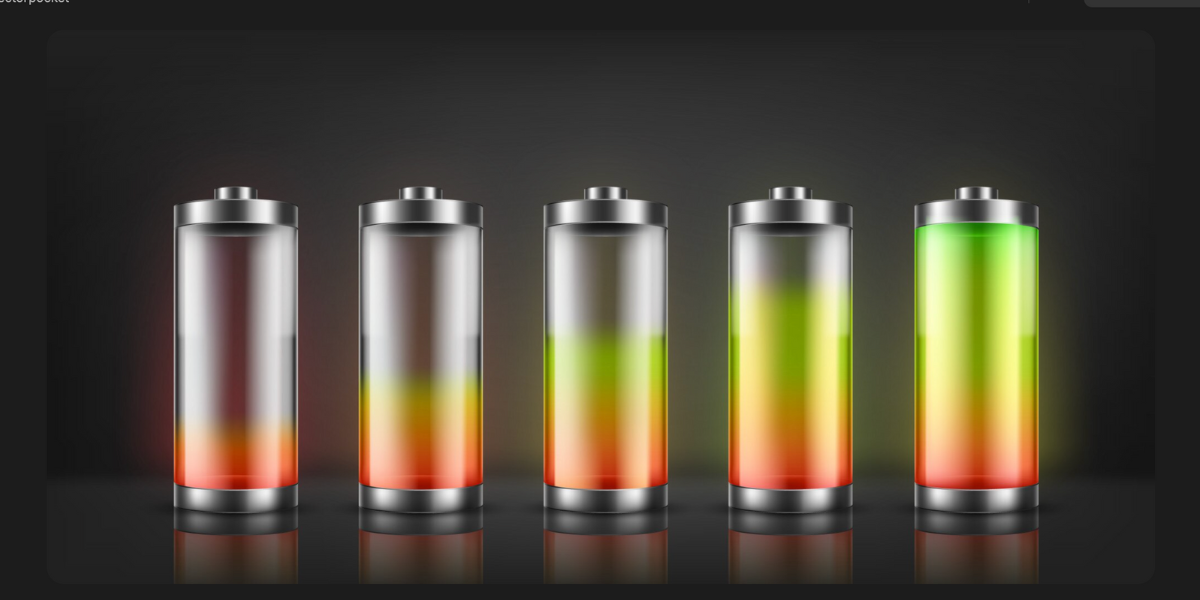
A battery is a device that uses an electrochemical oxidation-reduction (redox) reaction to directly convert the chemical energy contained in its active materials into electrical energy. In this procedure, an external electric circuit is used to move electrons from one material to another. The cell is the basic electrochemical unit in charge of producing or storing electrical energy, even though the term “battery” is frequently used.
Primary Vs. Secondary Batteries
Batteries can be broadly classified into primary (non‑rechargeable) and secondary (rechargeable) types.
Primary Battery: A primary cell, or primary battery, is designed for single use and cannot be recharged once it is discharged, after which it is discarded.
Most primary cells use electrolytes held within absorbent materials or separators, rather than free or liquid electrolytes, which is why they are commonly referred to as dry cells. Primary batteries are widely used in everyday devices such as remote controls and clocks.
Secondary Battery: A secondary battery can be electrically recharged after use and restored to its pre-discharge condition by passing current through the circuit in the opposite direction to that during discharge. Secondary batteries are widely used in portable electronic devices, electric vehicles (EVs) and renewable energy systems.
Lithium‑Ion Batteries: What They Are And How They Work
Lithium-ion (Li-ion) batteries are the most widely used rechargeable batteries today, powering devices such as smartphones, laptops and electric vehicles.
Though lead-acid rechargeable batteries date back to 1859, Li-ion battery research began in the 1970s. The first Li-ion cell was sold commercially in 1991.
During charging and discharging, lithium ions are transferred between the anode and cathode in Li-ion batteries. Li-ion batteries can store a lot of energy while yet being compact because lithium is so light.
Graphite serves as the anode in most Li-ion batteries.
Lithium-based substances, such as lithium cobalt oxide, serve as the cathode. Because of its design, the battery can be frequently charged and discharged without suffering serious harm, making it useful for everyday use.
Advantages And Disadvantages
Advantages: Compared with other rechargeable batteries such as nickel-cadmium, nickel-metal hydride and lead-acid, lithium-ion batteries offer clear advantages. They have much higher energy density, up to 330 watt-hours per kilogram, compared with about 75 Wh/kg for lead-acid batteries.
Li-ion cells also deliver higher voltage, up to 3.6 volts, making them suitable for high-power uses such as transport.
Li-ion batteries are low maintenance, have no memory effect, lose very little charge when not in use and do not contain toxic metals like lead or cadmium.
Disadvantages: Lithium-ion batteries account for over 80% of the more than 190 GWh of energy storage deployed globally through 2023, but they cannot support a fully renewable power grid on their own. A 100% clean energy system would require more than 10 TWh of storage, straining supplies of lithium, nickel and cobalt, while also demanding costs well below $100 per kWh and lifespans exceeding 20 years.
Solid‑State Batteries: What They Are
A solid-state battery is a device that converts chemical energy into electrical energy using a solid electrolyte to move lithium ions between the electrodes. The solid electrolyte moves lithium ions between the battery’s two electrodes. Unlike conventional lithium-ion batteries, which use liquid or gel electrolytes, solid-state batteries are fully solid. This makes them safer, longer-lasting, faster to charge and capable of storing more energy.”
Challenges Ahead
Solid-state lithium batteries offer strong potential, but several hurdles remain. Because both the electrodes and the electrolyte are solid, maintaining good contact between them is difficult, especially as the battery expands during use. Reactions at the electrode-electrolyte interface can also cause electrolyte breakdown and the formation of dendrites, which may pierce the solid electrolyte and trigger short circuits, fires or explosions.
Cost is another major challenge. Manufacturing solid electrolytes is complex, slow and inefficient, making large-scale production difficult. While these processes work in laboratories, they must be simplified and improved to make solid-state batteries commercially viable.
Conventional Rechargeable Batteries
Lead‑Acid Batteries: Lead-acid (LA) batteries are the oldest type of rechargeable batteries and were among the first used in both household and commercial applications. Their use today is limited, mainly due to the availability of more efficient, higher energy-density batteries. Lead-acid batteries usually cost between $300 and $600 per kWh, operate at 70% to 90% efficiency, and last around five years or 250–1,000 charge-discharge cycles.
Nickel‑Metal Hydride (NiMH) Batteries
Nickel-metal hydride (NiMH) batteries use hydrogen-storage alloys as the negative electrode and offer higher energy density by weight and volume. They also perform well at high power and can tolerate overcharging and overdischarging. The technology has become a leading battery choice for electric and hybrid electric vehicles.
Emerging And Alternative Technologies Sodium‑Ion and Other Chemistries
A sodium-ion battery works in much the same way as a lithium-ion battery, but it uses sodium ions instead of lithium ions to carry charge. The basic design and operation are similar, with sodium-based materials replacing lithium ones. These batteries are gaining attention because sodium is cheaper, more widely available and better for the environment. They also use aluminium instead of copper, which helps reduce costs further.
Flow Batteries
Flow batteries store energy in liquid electrolytes, which makes them easy to scale up and suitable for long-duration energy storage. One of the most widely used types for large power grids is the vanadium redox flow battery (VRFB).
Other advanced chemistries under investigation include lithium‑sulfur, zinc‑air, and molten‑salt designs like ZEBRA and sodium-sulfur batteries.
Battery innovation continues at a rapid pace as society shifts toward electrification and renewable energy. While lithium‑ion batteries dominate current markets, advanced technologies like solid‑state designs and alternative chemistries have the ability to reshape energy storage by offering better performance, improved safety and sustainability.